Blog

Starting Home Based Childcare: A Parent’s Guide to the First Weeks

The first day of childcare is a big moment, for your child and for you. Whether your baby is only six months old or your preschooler is about to start a new routine, it is normal to feel a mix of excitement and nerves. Many parents quietly wonder: Will they be okay? Will they settle? Will they miss me?

The good news is that with a little preparation, the transition can be smooth and even joyful. This guide is for families considering home based childcare in Castle Hill, and it explains what to expect in the first weeks, how to prepare your child, and how to support them through the settling-in period.

Why Settling In Matters

Every child is different. Some wave goodbye with a smile on day one. Others need time to feel comfortable with a new place, new faces and a new routine. Neither reaction is wrong.

Settling in is not just about the first drop-off. It is the process of your child learning that this is a safe place, that their educator is caring and reliable, and that you will always come back. When children feel secure, they are free to play, explore and learn. That is why a gentle, unhurried start makes such a difference.

Why a Home-Based Setting Can Help

Many children, especially babies and toddlers, find large rooms and big groups overwhelming. A home-like environment can feel calmer and more familiar. In a small-group setting such as family day care, there are fewer faces to get to know, quieter surroundings and more one-on-one attention.

At Starlin Family Day Care, we care for children from 6 months to 5 years in a safe, home-like space with bright indoor learning areas, reading and rest corners, art and sensory play zones, and a secure outdoor area. For many children, that warm, homely feel makes the first weeks easier.

If you would like to understand how this compares with a larger centre, see our guide to family day care in Castle Hill.

Before the First Day: How to Prepare
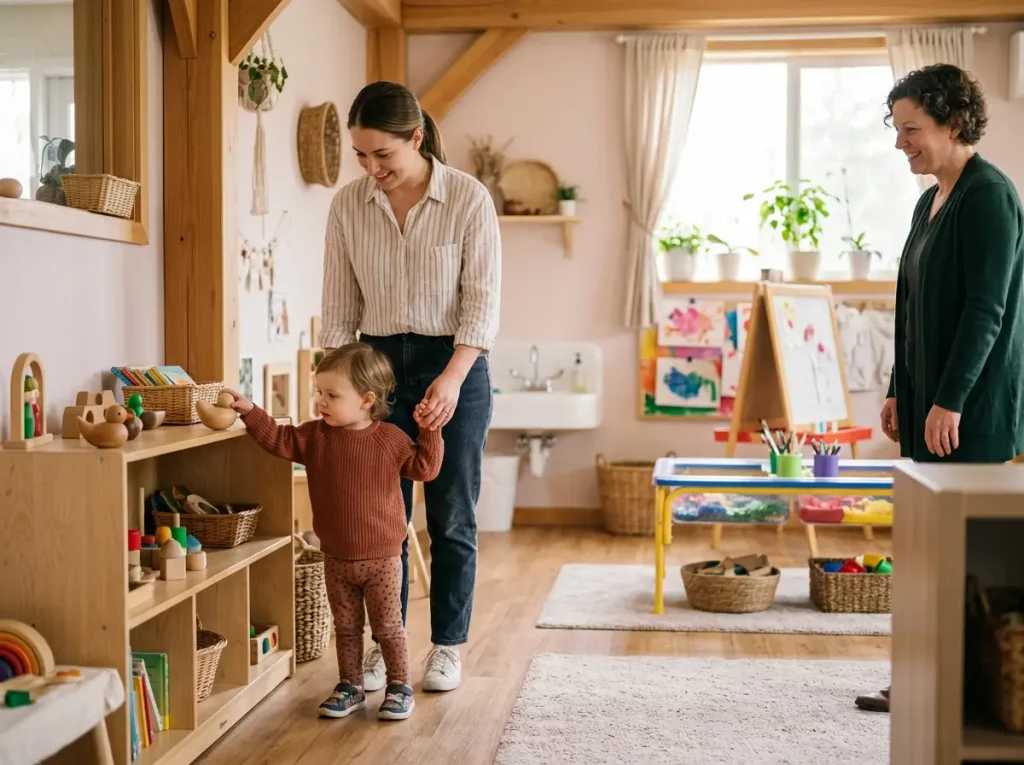
Parent and toddler visiting a home-style childcare room before the first day

Visit together first

If possible, visit with your child before their first day. Let them explore the space, meet the educator and see the toys and outdoor area. A familiar place feels much less scary than an unknown one.

Talk about it in a positive way

Mention childcare in simple, cheerful language, for example: “You are going to play with new toys and make new friends.” Read picture books about starting childcare or about a parent coming back after a goodbye. Avoid overpromising or making it sound like a big deal.

Share what makes your child unique

Tell the educator about your child’s routines, favourite comfort items, sleep habits, likes and dislikes, and any words they use for things. Cultural traditions and family preferences matter too, including food preferences. At Starlin, healthy snacks and meals can be provided by arrangement, following family and cultural preferences.

Bring a comfort item

A small blanket, soft toy or photo of the family can give your child a sense of security throughout the day.

Practise the routine

A few days before, try the new wake-up and morning routine so the first day does not feel like a sudden change.

The First Day and First Weeks

Keep goodbyes short and loving

It is tempting to linger, but long goodbyes can make things harder. A warm cuddle, a clear “I will be back after your afternoon rest” and a confident smile work best. Then go. Educators are skilled at helping children move from the goodbye into play.

Expect some tears, and some surprises

Crying at drop-off is very common and often stops within minutes after you leave. Some children seem fine for several days and then become clingy, which is also normal. Settling is rarely a straight line.

Stay consistent

Regular days and times help children learn what to expect. A predictable routine builds trust and makes each drop-off a little easier than the last.

Build a daily routine around the day

At Starlin, a typical day includes a morning welcome and play, group learning activities, outdoor exploration, lunch and rest time, and art, music and story sessions. These steady rhythms help children feel safe because they know what comes next.

Separation Anxiety: What Is Normal?

Separation anxiety is a natural stage of development, especially for babies and toddlers. It shows that your child has formed a strong bond with you. Common signs include:

  • Crying or clinging when you leave
  • Being unsettled at drop-off or pick-up
  • Changes in sleep or appetite during the first weeks
  • Wanting extra cuddles at home

These reactions usually ease as your child gets to know their educator and the routine. If your child continues to struggle after several weeks, talk with the educator. Together you can adjust the approach. If you have concerns about your child’s wellbeing, your GP or child health nurse can also offer guidance.

How Educators Help Children Settle
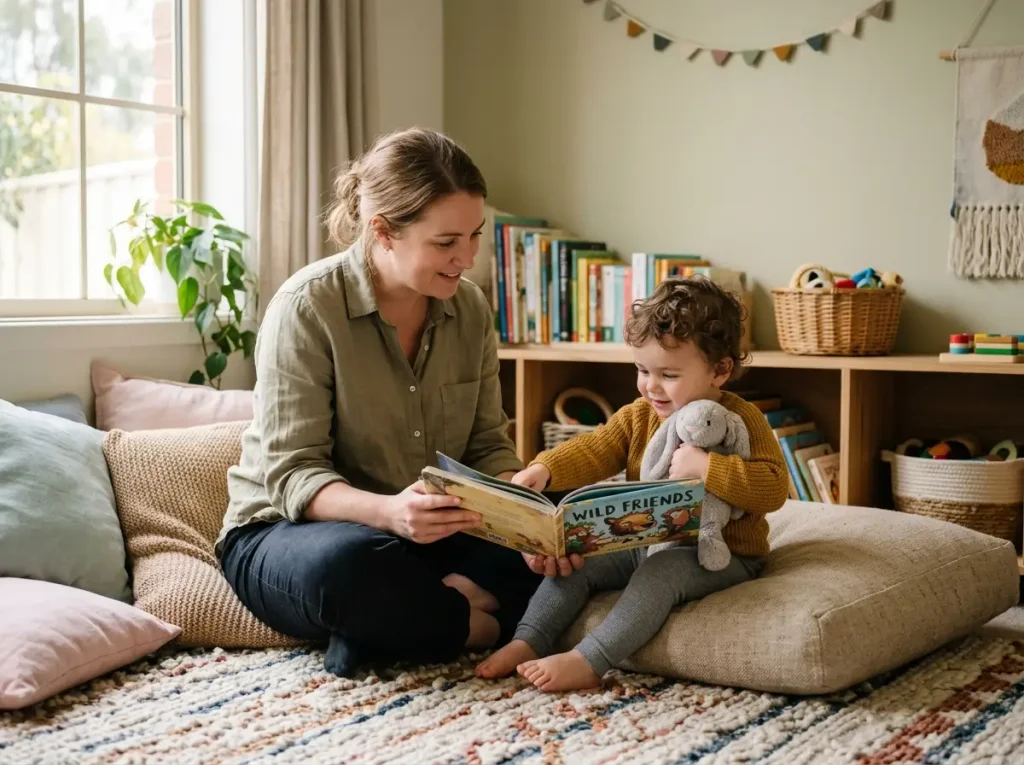
Educator comforting a toddler with a soft toy in a reading corner

A caring educator makes the biggest difference. Look for someone who:

  1. Welcomes your child warmly and learns what they enjoy.
  2. Communicates with you honestly about how the day went, including the difficult moments.
  3. Follows your child’s pace, offering comfort without rushing them into activities.
  4. Uses play to build trust, joining in gently so the child feels safe.
  5. Keeps routines predictable, with familiar rhythms across the day.

In a small group, the educator can give each child the time and attention they need to feel secure. As friendships form too, many children begin to look forward to seeing their new friends. You can read more about that in our article on why peers matter in childcare.

Tips for Parents: Looking After Yourself Too

The settling-in period can be emotional for parents as well. A few gentle reminders:

  • It is okay to feel sad or guilty. These feelings are common and usually fade as you see your child thrive.
  • Ask questions. A good service welcomes them.
  • Trust the process. Most children settle within a few weeks, though some take longer.
  • Celebrate small wins. A calm drop-off or a new friendship is worth noticing.

Family Day Care Across the Hills District

Families across the Hills District often balance busy work schedules, school runs and family life. A service close to home or work, with a welcoming and calm environment, can make daily routines far easier. If you are comparing options for family day care in the Hills District, a visit in person is the best way to see whether a service feels right for your family.

Frequently Asked Questions

How long does it take for a child to settle into childcare?

It varies. Many children settle within a couple of weeks, while others need longer. Consistency, a warm educator and a predictable routine all help.

Is it normal for my child to cry at drop-off?

Yes. It is very common and does not mean childcare is not working. Most children calm down soon after you leave and begin to play.

What should I bring on my child’s first day?

A comfort item, a change of clothes and any items your educator has asked for. Share your child’s routines and preferences with the educator beforehand.

Can I visit before my child starts?

Absolutely. A visit helps your child become familiar with the space and the educator before the first day.

Is home based childcare good for babies?

Many families find a small, calm, home-like setting a gentle start for babies and toddlers, because of the smaller group and more individual attention.

Ready to Take the First Step?

Starting childcare is a big step, but you do not have to do it alone. If you are looking for a warm, home-like environment where your child can settle in comfortably and grow with confidence, we would love to meet you.

Contact Starlin today to ask your questions, arrange a visit and see whether our home based childcare in Castle Hill is the right fit for your family.
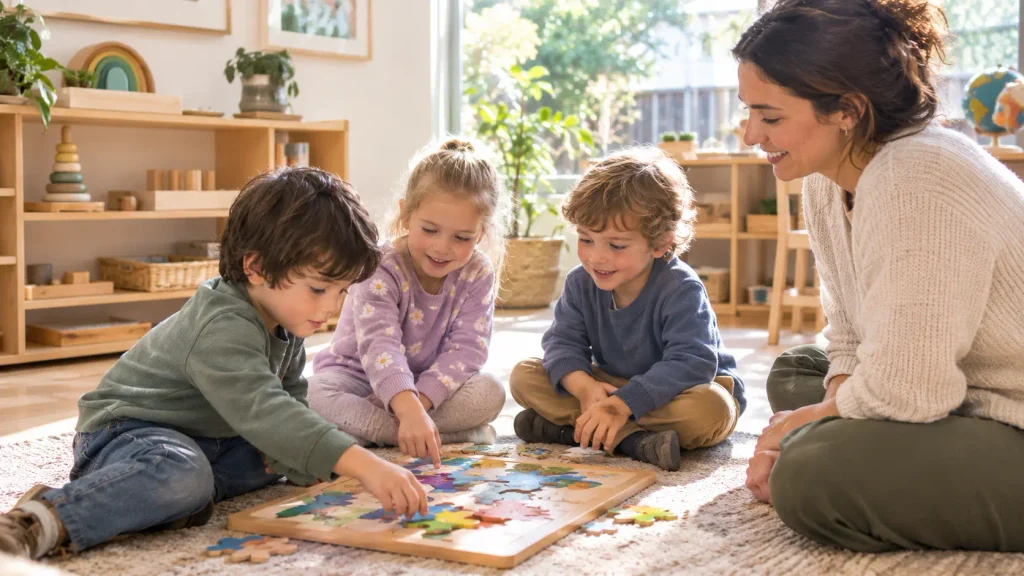

Learning Alongside Peers: How Other Children Help Your Child Grow

Ask any parent what they hope their child gets from childcare, and the answer is rarely just “supervision”. Most families want their child to learn, feel confident and make friends. That last part matters more than it might seem. Children do not only learn from adults. They learn enormously from each other.

For families comparing childcare in Castle Hill, understanding how peer learning works can help you choose a setting where your child will truly thrive. In this article, we look at how learning alongside other children supports development, why group size matters, and how educators make those interactions positive.

Why Peers Matter in Early Childhood

From the earliest years, children are social learners. They watch, imitate, copy words, test ideas and learn rules by being with others. A toddler sees a friend stack blocks and wants to try. A preschooler hears a friend explain a game and picks up new words. These everyday moments are powerful.

Being with other children gives your child something adults alone cannot: a real-life practice ground for sharing, negotiating, waiting, helping and making up after a disagreement. Home is where children feel safe. Time with peers is where they learn how to belong to a group.

The Benefits of Learning With Other Children

Stronger language and communication

Children talk differently with friends than they do with adults. They explain, invite, describe and invent stories together. Pretend games give them a reason to use new words, take turns in conversation and listen to others. Quieter children often find their voice in this setting too.

Empathy and emotional skills

When a friend is upset, children notice. Over time, with gentle guidance from educators, they learn to name feelings, show kindness and understand that other people see things differently. These early lessons in empathy form the base for healthy relationships throughout life.

Cooperation and problem-solving

Building a cubby, sharing a set of blocks or deciding who plays which role in a game all require teamwork. Children learn to compromise, share ideas and work toward a common goal. Disagreements, handled well, become valuable learning moments rather than problems to avoid.

Confidence and independence

Having friends to play with helps children feel secure and included. A child who sees a friend try something new, like pouring a drink or putting on shoes, is often inspired to have a go too. Success in a group builds a strong sense of “I can”.

Friendships and a sense of belonging

Friendships in early childhood are about much more than fun. Feeling accepted and valued by a group supports wellbeing, resilience and a positive attitude toward learning, which carries into school.

Does Group Size Make a Difference?

Educator helping two children talk through a disagreement during play

Absolutely. Peer learning is valuable, but the setting shapes how well it works. In very large groups, some children can feel overwhelmed or overlooked, especially if they are shy, sensitive or new to care.

In a smaller group, such as home based childcare in Castle Hill, children still enjoy the benefits of friendship and teamwork, but in a calmer environment. The educator can closely observe interactions, step in when needed and make sure every child has a chance to join in, speak up and be heard.

If you would like to understand how small-group care compares with a larger centre, read our guide to family day care in Castle Hill. To see how play supports these friendships, you may also enjoy our article on learning through play.

Common Worries Parents Have

“My child is shy.”

Shy children often do well in small groups. With fewer faces and a calmer room, they can warm up at their own pace, and a supportive educator can help them join in gently.

“My child is an only child.”

Time with other children can be especially valuable for children without siblings at home. It gives them regular practice in sharing, taking turns and playing cooperatively.

“What about conflict between children?”

Conflict is a normal part of early childhood and an important learning opportunity. A good educator does not simply stop it. They help children express feelings, listen to each other and find solutions, which builds long-term social skills.

“Will my child be okay separating from me?”

Many children need time to settle. Friendly peers and warm, caring educators help children feel safe, and positive friendships often make the transition easier.

How Educators Support Positive Peer Learning

Children chatting and playing together at a wooden play kitchen

Peer learning does not just happen on its own. Skilled educators plan for it by:

  • Modelling kindness and respectful language every day.
  • Naming emotions so children can understand and express how they feel.
  • Planning daily group learning activities, so children explore ideas and solve problems together.
  • Coaching children through disagreements rather than solving every problem for them.
  • Using routines like shared lunch, rest time and story sessions to create a sense of community.
  • Celebrating effort and cooperation, not just individual achievement.

Peer Learning at Starlin Family Day Care

Small group of children doing an art activity with an educator at a low table

At Starlin Family Day Care, we care for children from 6 months to 5 years in a safe, home-like setting. Our play-based, Montessori-inspired approach encourages independence while valuing the friendships children build along the way. Our small group size means every child is known, supported and included.

A typical day includes a morning welcome and play, group learning activities, outdoor exploration, lunch and rest time, and art, music and story sessions. Our spaces support this too, with bright indoor learning areas, reading and rest corners, art and sensory play zones, and a secure outdoor play space with natural elements. Healthy snacks and meals can also be provided by arrangement, following family and cultural preferences.

You can learn more on our Philosophy & Learning Approach page.

Childcare Across the Hills District

Families throughout the Hills District are often balancing busy work schedules, school runs and family life. When searching for childcare, many look for a service that offers not only convenience but a warm community feel. Family day care in the Hills District can offer exactly that: a friendly, small-group environment where children form genuine connections and families feel welcome.

What to Look For in Childcare in Castle Hill

When you visit a service, consider:

  1. How do the children interact? Do they seem relaxed, engaged and friendly toward one another?
  2. How do educators respond to conflict? Look for calm, supportive guidance.
  3. What is the group size? Smaller groups allow more individual attention.
  4. Are there opportunities for shared play and cooperation?
  5. Do you feel comfortable? Your own instincts are a great guide.

Frequently Asked Questions

How does learning with other children help development?

Peers help children build language, empathy, cooperation, confidence and problem-solving skills through everyday play and interaction.

Is a small group better for social development?

For many children, yes. Small groups allow more individual attention and a calmer environment, which helps shy or sensitive children feel included while still enjoying friendships.

At what age do children start playing with other children?

Babies notice and watch other children from an early age. Toddlers often play alongside each other, and from around three, children begin to play more cooperatively.

Can childcare help prepare my child for school?

Yes. Learning to share, listen, follow routines and make friends in childcare helps children transition confidently to school.

Let Your Child Grow With Friends

Choosing childcare is about finding the right place for your child’s heart, mind and friendships. If you would like to see how a small, caring group environment can help your child grow, we would love to meet you.

Contact Starlin today to ask questions, arrange a visit and discover whether our family day care in Castle Hill is the right fit for your family.
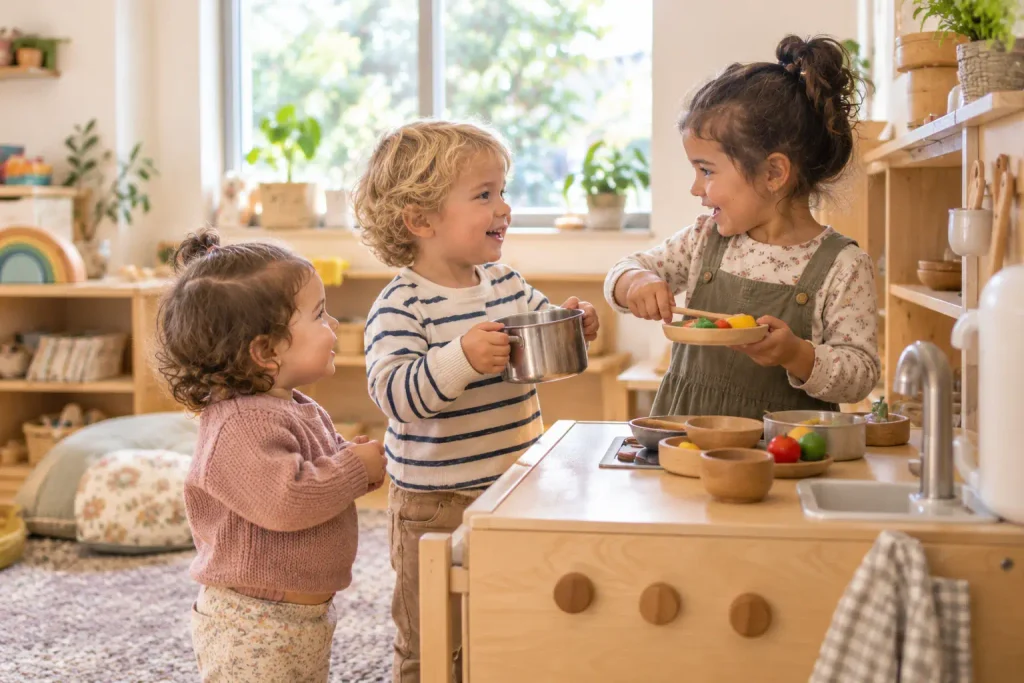
How Learning Through Play Shapes Your Child

Watch a toddler stack blocks, pour water between cups or pretend to run a shop, and you will see something remarkable. They look like they are simply having fun, but they are learning at a rapid pace. Play is not a break from learning in early childhood. It is how children learn best.

For parents exploring early learning in Castle Hill, understanding this idea can make choosing the right service much easier. In this article, we explain what play-based learning is, how it supports your child’s development, and what it looks like in everyday practice.

What Is Play-Based Learning?

Play-based learning is an approach to early education where children learn through exploration, imagination and hands-on experiences rather than worksheets or formal lessons. Educators set up an engaging environment, observe what each child is curious about, and gently extend their thinking through conversation, questions and new materials.

This approach is recognised across Australia. The national Early Years Learning Framework, which guides early childhood services, places play at the centre of learning for children from birth to five. So when your child is stacking, sorting, pretending or splashing, they are building real skills.

The key difference between random play and play-based learning is intention. A skilled educator plans the environment, chooses materials with purpose and uses everyday moments to support language, thinking and confidence.

How Play Supports Your Child’s Development

Language and communication

Young children exploring water and sand play at a sensory table

Play gives children a reason to talk. Pretend games lead to new vocabulary, storytelling and conversation. Songs, rhymes and picture books build listening skills and an early love of language. Children also learn to express what they want and need, a skill that supports every other area of learning.

Social and emotional skills

Playing alongside others teaches children to share, take turns, negotiate and cope when things do not go their way. They learn to recognise feelings in themselves and in others. These early lessons in empathy and resilience form the base for healthy friendships later in life.To explore this further, see our article on [why peers matter in childcare in Castle Hill]

Thinking and problem-solving

When a tower falls over, a child has to work out why and try again. Puzzles, sorting games and building activities develop reasoning, memory, concentration and early maths concepts such as size, shape, counting and patterns. Because children are curious and motivated, the learning sticks.

Physical development

Climbing, running and balancing build gross motor skills. Threading beads, drawing, pouring and playing with playdough strengthen the small muscles in the hands, which later support writing. Outdoor play also helps children develop confidence in their bodies.

Creativity and imagination

Painting, music, dress-ups and make-believe allow children to express ideas in their own way. Imagination is more than fun. It helps children think flexibly, solve problems creatively and see things from different perspectives.

Does Play-Based Learning Prepare Children for School?

Educator reading a picture book to preschool children during story time

This is one of the most common questions parents ask, and the answer is yes. School readiness is not just about knowing letters and numbers. Teachers look for children who can listen, follow routines, manage their emotions, communicate their needs, cooperate with others and feel confident having a go.

Play builds exactly these skills. A child who has spent time in a rich play environment arrives at school curious, independent and ready to learn. Early literacy and numeracy are also woven naturally into play, through stories, songs, counting games and hands-on activities, so children meet these ideas in a way that feels enjoyable rather than pressured.

Play-Based Learning in a Family Day Care Setting

A smaller group can make play-based learning even more powerful. In a home-based service, the educator can closely observe each child, notice their interests and respond straight away. If a child is fascinated by insects in the garden, the day can grow from there into books, drawing, counting and conversation.

At Starlin Family Day Care, our approach is play-based and Montessori-inspired. That means children are encouraged to explore real, hands-on materials, make their own choices and build independence at their own pace. Low, accessible shelves, natural materials and calm routines help children feel secure and capable.

If you would like to learn more about how a home-based service compares with a large centre, read our guide to family day care in Castle Hill. You can also explore our Philosophy & Learning Approach and Programs pages.

Everyday Examples of Play-Based Learning

Here are some simple activities and what they teach:

  • Block building: spatial awareness, balance, problem-solving and persistence
  • Sorting colours and shapes: early maths, categorising and concentration
  • Water and sand play: science concepts, measuring and sensory exploration
  • Pretend play (shops, kitchens, doctors): language, empathy and social skills
  • Story time and singing: listening, vocabulary and a love of books
  • Painting and drawing: creativity, fine motor control and self-expression
  • Gardening and nature walks: curiosity, responsibility and an understanding of the world around them

You can easily bring these ideas into your own home too. A cardboard box, some wooden spoons and a few questions are often all it takes.

What to Look For in Early Learning in Castle Hill

When comparing childcare in Castle Hill, look beyond the brochure and ask what a typical day looks like. A quality play-based service should show:

  1. A thoughtfully prepared environment with open-ended materials, not just screens or plastic toys.
  2. Educators who engage, asking questions and joining in rather than just supervising.
  3. A balance of play, rest, meals and outdoor time.
  4. Clear communication, so you know what your child explored and learned each day.
  5. Children who seem happy, busy and absorbed.

Visiting in person is the best way to see whether a service feels right for your family.

Frequently Asked Questions

What is play-based learning in early childhood?

It is an approach where children learn through exploration, imagination and hands-on activities. Educators plan the environment and guide learning through play rather than formal instruction.

Is play-based learning enough to prepare my child for school?

Yes. Play develops language, social skills, emotional regulation, concentration and independence, which are the foundations children need to thrive in school.

At what age should children start learning through play?

From birth. Babies learn through sensory exploration, toddlers through movement and imitation, and preschoolers through pretend play, building and problem-solving.

Is play-based learning offered in family day care?

Yes. Family day care is well suited to play-based learning because small groups allow educators to follow each child’s interests closely.

See Play-Based Learning in Action

Reading about play is helpful, but seeing it makes all the difference. If you are looking for a warm, small-group environment where your child can explore, grow and shine, we would love to meet you.

Contact Starlin today to ask your questions, arrange a visit and see how our play-based, Montessori-inspired approach can support your child’s early learning journey in Castle Hill.

Family Day Care in Castle Hill: A Complete Guide for Parents

Choosing childcare is one of the biggest decisions a family makes. For many parents in Castle Hill, the question is not just who will care for their child, but where and how. Large centres suit some families, but others want something calmer, smaller and more personal. That is where family day care comes in.

In this guide, we explain what family day care is, how it differs from a traditional centre, and what to look for when choosing home-based childcare in Castle Hill and the wider Hills District.

What Is Family Day Care?

Family day care is a form of home-based childcare. A qualified educator cares for a small group of children in a warm, home-like setting rather than in a large commercial centre. It is a regulated service in Australia and follows the National Quality Framework, the same framework that guides other approved education and care services.

At its heart, family day care offers a simple idea: children thrive when they feel safe, known and valued. Because the group is small, the educator can build a genuine relationship with every child and every family.

Family Day Care vs Childcare Centres in Castle Hill

Parents searching for childcare in Castle Hill will find a wide range of options, from large long day care centres to preschools and home-based services. Neither choice is “better” for every child. The right fit depends on your child’s personality and your family’s needs.

Group size. Centres usually care for many children across several rooms. Family day care keeps groups small, which means more one-on-one attention and a quieter environment. Small groups also make it easier for children to build friendships, and you can read more about [how learning alongside peers helps children grow]

Continuity of care. In a home-based service, your child is typically cared for by the same educator every day. This consistency helps babies and toddlers in particular to feel secure.

Atmosphere. Family day care feels like an extension of home. Children eat, play, rest and learn in a familiar, relaxed space.

Flexibility. Smaller services can often respond more personally to routines such as sleep, meals and settling in.

If your child is sensitive to noise, new to care, or simply does well in smaller groups, home based childcare in Castle Hill is well worth considering.

Why Families Choose Home-Based Childcare

Personalised care

With fewer children, an educator can notice the little things: a new word, a first friendship, a tricky afternoon. Learning is shaped around each child’s interests and pace rather than a one-size-fits-all timetable.

A calm, nurturing environment

Many children, especially under three, find large rooms overwhelming. A home setting offers softer sounds, familiar routines and a gentler start to early education.

Strong partnership with parents

Daily communication is easier in a small service. Parents can talk openly with their child’s educator at drop-off and pick-up and feel genuinely involved in their child’s day.

Mixed-age friendships

Children of different ages play and learn together, a little like siblings. Older children build confidence and empathy, while younger ones learn by watching.

Early Learning in a Home Setting

A common question from parents is whether home-based care is real early learning or “just minding”. In a quality service, it is absolutely early learning.

Early learning in Castle Hill family day care is built around play. Through play, children develop language, problem-solving, creativity, coordination and social skills. At Starlin Family Day Care, our approach is play-based and Montessori-inspired, which means children are encouraged to explore real, hands-on materials, make choices and develop independence at their own pace.

Our programs support every area of development:

  • Social and emotional: sharing, empathy, resilience and making friends
  • Physical: fine and gross motor skills through indoor and outdoor play
  • Cognitive: curiosity, early maths and literacy, and problem-solving
  • Language: conversation, storytelling, songs and books

For children approaching school age, we also include school readiness activities that build confidence, routines and independence, so the transition to kindergarten feels exciting rather than daunting. You can read more about our approach on our Philosophy & Learning Approach page or explore our Programs.

What to Look For When Choosing Childcare in Castle Hill

Whether you choose a centre or a home-based service, visit in person and ask questions. Here is a simple checklist:

  1. Qualifications and passion. Is the educator qualified, and do they genuinely enjoy working with children?
  2. Safety and hygiene. Is the space clean, secure and set up with young children in mind?
  3. Group size. How many children are in care at one time?
  4. Learning approach. Is there a clear philosophy, and how is learning planned and shared with families?
  5. Daily rhythm. Look for a balance of play, meals, rest and outdoor time.
  6. Communication. How will you hear about your child’s day and progress?
  7. How it feels. Do the children seem happy, settled and engaged?

Trust your instincts. The best service is one where your child is comfortable and you feel at ease.

Family Day Care Across the Hills District

Families across the Hills District, including Castle Hill and nearby suburbs, are increasingly looking for family day care in the Hills District that offers something more personal than a large centre. The area is busy, with many parents balancing work, school runs and family life, so convenience and reliability matter.

A home-based service close to home or work can make daily routines smoother. Smaller drop-off environments also tend to be calmer, which can make mornings easier for both children and parents. If you live in or near Castle Hill and are comparing local options, we welcome you to visit and see our environment first-hand on our Our Environment page, or browse our Gallery.

What Makes Starlin Family Day Care Different

At Starlin Family Day Care, we believe every child deserves a safe, nurturing and inspiring place to explore, discover and grow. Our service is built around:

  • Small group sizes for personalised care
  • Play-based and Montessori-inspired learning
  • A safe, hygienic and home-like environment
  • School readiness and developmental programs
  • A qualified and passionate educator

Our motto says it best: a home away from home, where every child shines like a star.

Frequently Asked Questions

What is family day care in Castle Hill?

Family day care is home-based childcare delivered by a qualified educator in a small-group setting. It offers a personal, home-like alternative to a large childcare centre.

Is family day care a good option for early learning?

Yes. Quality family day care follows a structured, play-based learning approach that supports social, emotional, physical and cognitive development, just like other early learning services.

How is home based childcare different from a childcare centre?

Home-based childcare typically means smaller groups, a consistent educator and a calmer, family-style atmosphere. Centres usually have larger groups and multiple rooms.

Can I visit before enrolling?

Absolutely. We encourage families to book a visit so you can see the environment, meet the educator and ask any questions.

How do I enrol my child?

Visit our Enrolment page to get started, or contact us and we will guide you through the process.

Book a Visit Today

Finding the right childcare in Castle Hill is a big step, and we would love to meet you and your child. See why families love Starlin Family Day Care by booking a visit today.

Enrol now | Contact Starlin